Gossip Rant Chat Wa gwan Breaking Scandal Hot off the press Bulletin Dispatches Nachrichten

From how to why: an MNO macro-case study
Here at The Fold, we’re fascinated by how brands tell their story, and how that story changes over time. We’ve worked in the telco world for years, with brands in both the consumer and B2B landscapes, and when it comes to MNOs we’ve noticed something interesting that showcases how tech brands are framing their narratives.

Perhaps case study is the wrong term. Trend report might be more accurate, or insight piece. Whatever we want to call it, we’ve noticed that, over the past few years, the way Mobile Network Operators (MNOs) are telling their stories has shifted. And the way in which it has changed offers valuable insight into the overall direction of B2B storytelling. This is by no means an exhaustive analysis of the entire sector, and we’ll be cherry-picking some examples that demonstrate our point and offer some thoughts on the factors that might have influenced the change. Also, we must acknowledge that local and environmental factors influence the stories that these MNOs are telling, so there’s a geographical specificity that also impacts their stories.

FROM VOICE TO DATA
We should probably begin with some context. Before the explosion of connectivity, social media, and the shift to digital in so many aspects of our lives, the lifeblood of MNO businesses was voice connectivity, and to a lesser extent SMS messaging. This showed in how phone plans were marketed, differentiating themselves through number of minutes and messages offered at specific price plans. And as technology evolved from 2G to 3G, data connectivity was marketed in a similar way, with bundles of data at specific price points. This left MNOs in the position of commodities, the “pipe” that served the market, and had them competing on price, and on coverage.
The ability to use your phone in more places was a vital distinguisher, especially in the UK and US markets. So much so, that entire businesses such as RootMetrics and OpenSignal were created to certify and prove coverage.
The advent of 4G (and later 5G) connectivity signalled a sea change in how mobile phone plans were marketed. Gone were the bundles of minutes and SMS; how much data (and how reliable that data was) became the fundamental differentiator between networks. So much so in fact that unlimited minutes and SMS became the norm for nearly all mobile phone offerings. Then as the number of connected devices in households increased, and connectivity for tablets, smartwatches, and other devices became staples in MNOs propositions, even data became unlimited for a large portion of networks’ plans.
"The advent of 4G (and later 5G) connectivity signalled a sea change in how mobile phone plans were marketed."
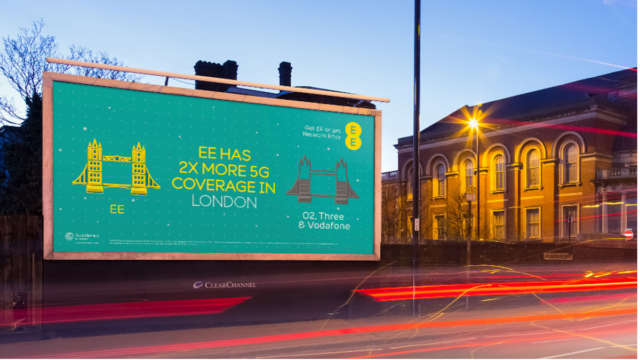
So, in terms of pure competition, the only metrics that networks could compete on were price, coverage, and speed. And during the 2010s—and continuing into the 2020s—this competition became fierce.
For example, in the UK, EE was the first network to launch 4G. They made the 4G rollout a virtue in their marketing plans, creating local advertising to build excitement around the arrival (and reliability) of 4G connectivity in towns and cities—a pattern they repeated to great success with their 5G rollout.
Other UK networks followed a similar path, each claiming to have superior coverage or speed in various circumstances. “Indoor coverage” vs “outdoor coverage” became a battleground.
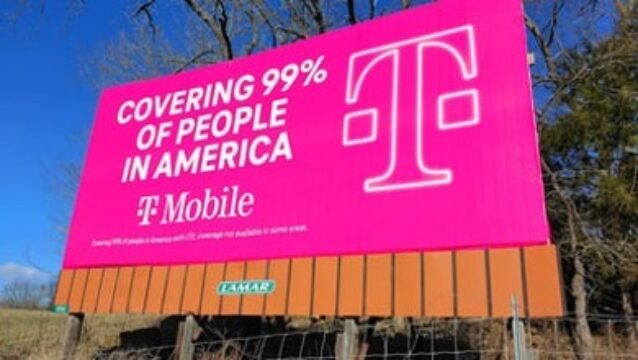
In the US too, coverage was a crucial component to MNO marketing. T-Mobile especially had a huge push on geographic 4G and 5G coverage.
You would think that this one-note marketing would lead to a race to the bottom, reinforcing the view of MNOs as commodities. However, in recent years, MNO brand advertising has evolved—and it’s a noticeable change.

SO, WHAT'S THE SHIFT WE'RE TAKING ABOUT?
In recent days, MNO’s have evolved their top-level advertising to centre around enablement. Rather than focusing on the what—their presence, speed, and reliability—they’ve pivoted to talk about the why. The brand marketing stories from MNOs today foreground enablement—what business and consumer customers can do with their networks—, and the experiences and opportunities that their connectivity makes possible.
When coverage and speed are mentioned, they have moved down the messaging ladder to become proof points for this new narrative; one of enablement and trust.

For example, EE’s Christmas 2025 advertising campaigns revolve around the idea of human connection, and how their network has the strength and resilience to make that possible:
This builds on their overall 2024/2025 advertising as “for” various scenarios, from gaming to business.
Vodafone UK pushed a similar message throughout the year, positioning themselves as “The Nation’s Network”, enabling emotive moments of connection and drawing on their history and legacy of enabling these moments.
Looking at T-Mobile in the US shows this shift isn’t just confined to the UK, with Superbowl ads demonstrating the value of connecting with others at big moments.

IS IT REALLY A 180-DEGREE SHIFT?
Well, yes and no. It’s about the story that they’re trying to tell. And that story has shifted across recent years. Before, coverage was positioned as an end goal, and that what you can do with coverage was implied. Now, MNOs are calling out the experiences, moments, and connections that they can be relied upon to make happen, with coverage and speed as the “reasons to believe”. MNOs are still creating ads that boast about these virtues, even solely boasting about them. But what’s different is now the claims are rooted in a context of enablement and trust. Customers see how the scenarios and stories these brands are telling resonate with their lives and can then more easily understand and connect with the reliability and coverage proof points.
That’s not to say that enablement stories weren’t told before. They were. However, the connectivity messages and enablement messages felt siloed. Now, it’s more of an integrated message, and enablement is the primary lens MNOs are using to tell their overall brand stories. It’s a matter of emphasis, and the strategic priority that MNOs are placing on strong, interconnected, and coherent storytelling.

IS THIS JUST A CONSUMER PLAY?
No, and in fact another facet of this shift is that B2B and B2C messaging is becoming more intertwined, with specific B2B ads drawing on the overall enablement storyline the brands are telling at a top level. For example, Vodafone UK’s B2B ads reframe the enablement and “Nation’s Network” storyline in their overall ads with their “Your business can” campaign, and EE have incorporated their B2B offerings into their overall “New EE” model, creating an integrated framework that can tell specific business stories.

WHAT'S THE LESSON?
In short, storytelling sells. And MNOs have noticed. They’ve adapted, avoiding the commoditisation of mobile connectivity to tell a story that centres their brand as the fundamental mover behind genuine moments of enablement. It’s a smart move, and one that B2B brands, especially tech brands, can absorb and use to their advantage. Frame yourself as central to the narrative, as the motivating force that can enable human experience—and show that experience to your audience in a creative way. That’s a recipe for success, and even in today’s fragmented, digital world, one that can be relied upon into the future.
Of course, all the above is a vast over-simplification. There are many factors that have influenced this change, and we have barely scratched the surface. This shift is echoed in other industries, and each industry has its own story to tell, ands its own specific challenges and consideration. This is just one example of how, when brands move to a more narrative-focussed approach, their marketing can take flight.
FANCY A NATTER?
Want to know more about how we can help you evolve both your story and your storytelling? Take a look at our dedicated page.
FANCY A NATTER?
Want to know more about how we can help you evolve both your story and your storytelling? Take a look at our landing page.